
When asking us about weight loss, Dallas patients aren’t looking for a stricter diet. We know you want to understand what else might be affecting your weight
For example, if blood sugar, hormones, sleep, stress, or lifestyle habits are not in balance, your weight can increase or stay stuck, even when you’re making an effort.
The kind of medical weight loss our Dallas clinics provide takes a different approach. Instead of focusing only on calories or short-term results, it looks at how your body is functioning overall and builds a plan around that.
The goal is not rapid change, but steady, sustainable, and safe progress towards the ideal weight for you long-term.
Table of contents:
Why Sustainable Weight Loss Matters for Long-Term Health
Medical Weight Loss vs. Trend Diets
How Does Gut Health Impact Weight Loss and Energy Levels
How Do Hormones Affect Weight Gain? What You Should Know
Diabetes Prevention and Weight Management
Mental Health and Emotional Wellness During Weight Loss
Weight Loss Treatment Options Available in Dallas
 Why Sustainable Weight Loss Matters for Long-Term Health
 Why Sustainable Weight Loss Matters for Long-Term Health
Sustainable weight loss matters because it reflects how well your body’s functioning – and likely to function in the future.
When weight increases gradually or proves difficult to lose, it often points to underlying factors such as reduced insulin sensitivity, hormone imbalance, poor sleep, or ongoing stress.
All these are closely linked to a range of possible longer-term health risks.
As your body becomes less responsive to insulin, blood sugar levels can rise, increasing the risk of prediabetes and type 2 diabetes.
Carrying additional weight can place more strain on your heart and blood vessels, contributing to high blood pressure and cardiovascular disease.
At the same time, low-grade inflammation may develop, which can affect your joint health, energy levels, and overall metabolic function.
This is why quick fixes tend to fail. Short-term diets often reduce weight temporarily, but they don’t change how your body regulates itself healthily over time.
In many cases, your metabolism actually adapts by slowing down – while the original drivers of weight gain remain in place! When you return to your usual routine, you often regain the weight you lost.
That’s why we focus on sustainable weight loss.
This means improving how your body responds to food, activity, and daily demands.
With stable blood sugar, improved sleep quality, or reduced stress, weight loss becomes more consistent, and the results are far more likely to last. Which improves your long-term health.
 Medical Weight Loss vs. Trend Diets
 Medical Weight Loss vs. Trend Diets
Medical weight loss at our Dallas clinics (such as Carrollton, as well as Merit, and Buckner) focuses on your unique body, not a diet plan.
Trend diets tend to apply the same rules to everyone – cut calories, remove certain foods, or follow a strict routine – without considering how your metabolism, hormones, or blood sugar are actually working.
Individualized Weight-Loss Plans With Physician-Guided Care
With doctor-supervised weight loss, the first step is understanding what may be slowing your progress.
They may review your medical history, current symptoms, medications, and lifestyle habits.
From there, they develop with you a weight loss treatment plan that reflects your specific needs rather than a generic template.
That may mean focusing on nutrition and activity. Or it may involve addressing sleep, stress, gut health, and weight loss – or maybe hormone-related changes that are affecting your metabolism.
This individualized approach is more sustainable for patients undergoing weight management in Dallas.
Doctors then make adjustments based on your body’s response over time.
Ongoing monitoring is a key part of medical weight loss care, helping to keep progress steady and avoid the frustrating cycle of losing and regaining weight.
When Medication May be Appropriate
They may also consider medication-assisted weight loss. It’s not the starting point for everyone but can be useful if excess weight is affecting your health, or when other approaches haven’t led to sufficient progress.
You’ll have heard that medication can help regulate your appetite or manage your blood sugar. But it works best as part of a broader plan that includes nutrition, activity, and regular follow-up.
The difference in these approaches lies in the outcome. Trend diets focus on short-term results. A medically guided approach focuses on helping you achieve healthy weight loss in a way that supports your long-term health.
There are several other factors that may be affecting your weight loss, including gut health and hormones.
 How Does Gut Health Impact Weight Loss and Energy Levels?
 How Does Gut Health Impact Weight Loss and Energy Levels?
Gut health and weight loss are closely linked through digestion and metabolism. Gut health can affect how your body absorbs nutrients, regulates appetite, and manages inflammation. When it’s disrupted, weight loss may feel harder even with consistent effort.
The Role of Digestion and Metabolism
Your gut affects how your body processes food and uses energy. If digestion isn’t working efficiently, nutrient absorption and energy levels can suffer. This can slow your metabolism and make healthy weight loss more difficult to achieve.
You may notice this as fatigue, inconsistent appetite, or difficulty maintaining steady energy throughout the day. These are often early signs that your body is not using fuel as effectively as it should.
Gut Health and Inflammation
When the good and bad bacteria in your gut are out of balance, low-grade inflammation can develop. This can interfere with metabolic processes and make weight loss treatment less effective.
Your gut also plays a role in how your body regulates appetite and stores energy. An imbalance in gut bacteria may influence cravings, energy use, and how easily your body stores fat over time.
How Nutrition Affects Overall Wellness
What you eat directly affects your gut health, which in turn supports your wellness goals. This is why we offer help with food choices in all our primary care Dallas and wellness clinic Dallas locations.
Diets built around highly processed foods can disrupt your gut balance. Eating whole foods that are nutrient-dense supports your digestion and metabolic stability.
Small, consistent changes here can not only help with weight management but energize you to stay active.
How Do Hormones Affect Weight Gain? What You Should Know
 How Do Hormones Affect Weight Gain? What You Should Know
It’s easy to forget that hormones can play a part in weight issues. Here’s why.
Hormonal Imbalances That Affect Metabolism
Hormones play a central role in how your body regulates appetite, energy use, and fat storage – i.e. your metabolism.
When hormones are out of balance, you can gain weight despite good food choices and activity levels.
This is one of the reasons both men and women seek support for medical weight loss in Dallas: Their results have stalled despite consistent effort.
Common hormone issues include insulin resistance (see below), elevated cortisol linked to ongoing stress, and changes in sex hormones. For example, losing weight with PCOS is harder, but still doable.
Each of these can affect how your body stores fat, which can lead to weight gain.
Thyroid Health
Thyroid function and blood sugar regulation are two of the most important factors in weight management that our Dallas patients often overlook.
An underactive thyroid can slow your metabolic rate, reduce your energy levels, and make weight loss harder.
Insulin Resistance
At the same time, insulin resistance affects how your body handles glucose. Instead of using it efficiently for energy, your body is more likely to store it as fat.
This is closely linked to diabetes prevention and long-term metabolic health, which is why it’s often part of a doctor-supervised weight loss plan.
Hormone Therapy Options for Men and Women
Your doctor’s assessment may show your hormone levels are contributing to weight gain. When this happens, treatment may be an option as part of a broader weight loss treatment plan.
Hormone therapy for men and women is not a standalone solution. But it can support weight loss when combined with lifestyle changes such as improved nutrition, better sleep, and stress management.
The focus remains on your long-term health, ensuring that any medical support works alongside sustainable habits rather than replacing them.
Diabetes Prevention and Weight Management
 Diabetes Prevention and Weight Management
The CDC estimates there are 40.1 million people with diagnosed or undiagnosed diabetes in the US.
Blood sugar management is therefore a central part of many plans for medical weight loss in Dallas.
The Relationship Between Weight and Blood Sugar
As weight increases, your body can become less responsive to insulin, making it harder to use glucose for energy. Instead, more of that energy is stored as fat, which can make weight loss difficult.
When glucose levels stabilize, energy and appetite signals are usually easier to manage.
Early Warning Signs of Insulin Resistance
Insulin resistance often develops gradually. You may notice ongoing fatigue, particularly after meals, or find yourself feeling hungry again soon after eating. Cravings for sugar or refined carbohydrates can also become more frequent.
These patterns may reflect how your body is processing energy. Identifying them early allows you to take action before they develop into more serious concerns such as prediabetes or type 2 diabetes.
Lifestyle Habits That Support Prevention of Type 2 Diabetes
Lifestyle-focused habits play a key role in diabetes prevention and long-term weight management that Dallas patients can sustain.
- Balanced meals that include protein, fiber, and healthy fats can help regulate blood sugar levels throughout the day.
- Regular physical activity improves how your body responds to insulin, making it easier to use energy efficiently.
- Sleep and stress management also matter, as both can influence blood sugar and appetite.
Taken together, these changes support both your healthy weight loss and long-term metabolic health. They also reduce the risk of future complications while helping you feel healthier day to day.
Mental Health and Emotional Wellness During Weight Loss
Your mental health can affect your ability to lose weight.
For example, stress can easily lead to overeating – or comfort eating with convenient, high-calorie foods.
At the same time, ongoing anxiety can lead to disrupted sleep and fluctuating energy levels, so you skip the activity you planned. Anxiety and weight loss are not good companions!
Poor sleep can also increase hunger signals and lead to endless snacking.
Overall, stress, anxiety, and poor sleep can make your weight loss harder to maintain long-term. A broad medical weight loss treatment plan and support for your mental health can help create more sustainable results.
 Weight Loss Treatment Options Available in Dallas
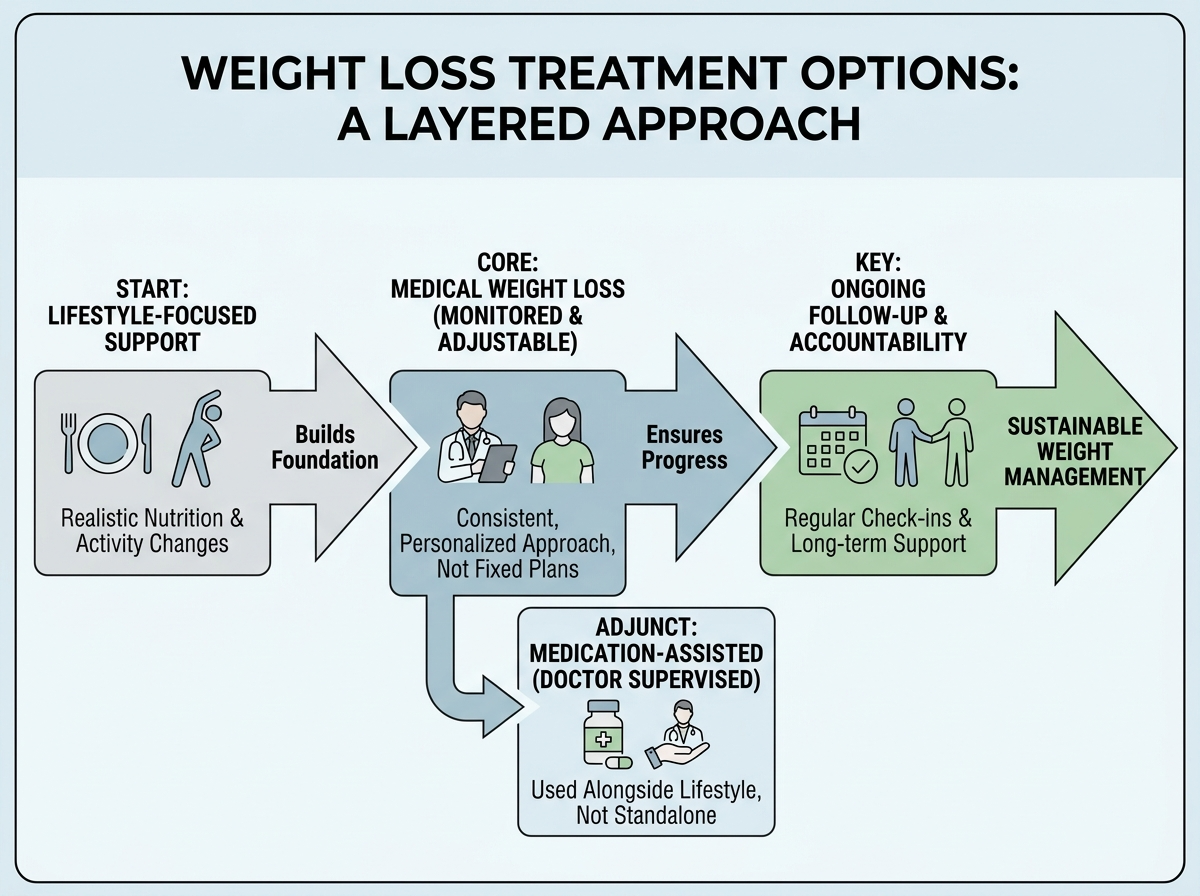 Weight Loss Treatment Options Available in Dallas
Weight loss treatment for our Dallas patients will depend on your unique needs and health goals.
Most plans begin with lifestyle-focused support, including realistic nutrition changes and activity adjustments that fit your daily routine and support healthy weight loss over time.
Medical weight loss focuses on monitoring your progress and adjusting plans based on how your body responds.
This allows for a more consistent approach to weight management, rather than relying on fixed plans that may not suit you.
In some cases, medication-assisted weight loss may be appropriate, as we mentioned earlier. But this is always within a doctor supervised weight loss plan and used alongside lifestyle changes, rather than as a standalone solution.
Ongoing follow-up and accountability are also a key part of medical weight loss treatment options.
Why Patients Choose Stella Mattina for Weight Loss Support
Our patients choose us for weight loss in Dallas because our focus is on building a plan that works for your body and your life. In other words, an integrated primary care approach.
In our primary care Dallas clinics, we don’t treat weight management in isolation. We look at your overall health, which allows for a more complete and coordinated approach to support your long-term wellbeing.
Care is based on your health history, daily routine, and any factors affecting your progress, like blood sugar management, hormones, gut health, or lifestyle habits.
At your first visit, we focus on understanding what’s driving your weight concerns. This may include discussing your medical history, current symptoms, and any patterns you’ve noticed around energy, appetite, or sleep.
From there, you’ll receive clear, practical next steps and a weight loss treatment plan tailored to your unique needs.
Schedule a Weight Loss Consultation in Dallas with Stella Mattina
If you’ve tried all the trend diets and are frustrated with the results, and you’re searching instead for medical weight loss Dallas, schedule a consultation with us today.

Asma Bhaidani, PA-C
AsmaBhaidani, PA-C graduated in 2008 from Midwestern University in Arizona with a Masters in Medical Science. She received her undergraduate in Psychology with a focus on Pre-Med. With nearly two decades of experience, Asma uses her background in non-narcotic pain management, weight loss counseling, and Family Medicine to empower the next generation with the knowledge and confidence to achieve their wellness aims.