
Irregular periods after birth are incredibly common, especially in the months following delivery. After giving birth, your body goes through a huge reset. One of the most common things women notice during the postpartum phase is that periods don’t behave the way they used to.
If you’re dealing with late periods, early periods, spotting, or cycles that seem unpredictable, you’re not alone.
Irregular periods are normal as your body adjusts after pregnancy and childbirth. Your hormones, uterus, and overall energy balance need time to recalibrate. And your menstrual cycle is often one of the last systems to settle back into a familiar rhythm.
Irregular periods after birth can be influenced by hormones, physical healing, breastfeeding, stress, and lifestyle changes.
When you’re balancing work, recovery, and caring for a newborn, experiencing irregular periods can be worrying.
You might wonder if something’s wrong, whether your cycle will ever feel “normal” again, or if these changes affect your future fertility. But an irregular period after giving birth doesn’t automatically signal a problem.
Here’s all you need to know to understand what’s normal or when you might need support.
Table of contents
How Hormonal Changes After Birth Affect Periods
Physical Recovery after Childbirth
Breastfeeding and Its Effect on Period Timing and Flow
The First Period After Giving Birth
Common Postpartum Menstrual Changes Over Time
Absent or Delayed Periods After Childbirth
Fertility, Ovulation, and Birth Control Considerations
Painful Periods and Heavy Bleeding After Birth
Managing Irregular Periods and Knowing When to Get Help
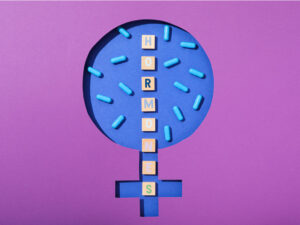
How Hormonal Changes After Birth Affect Periods
After delivery, your body experiences some dramatic hormonal changes.
During pregnancy, hormone levels stay consistently high to support your baby. But once you give birth and the placenta is delivered, those hormone levels drop sharply.
That sudden shift is key to irregular periods during your first postpartum period. Here’s why.
Estrogen and progesterone (that help regulate your menstrual cycle) drop rapidly. This can interrupt signals between your brain and ovaries, making it harder for your body to settle into its usual rhythm.
As a result, your cycle length may change. Timing may be off. Bleeding may look different. In some cases, periods disappear for a while altogether.
These hormonal fluctuations are one of the main reasons your cycles feel so off in the early months postpartum.
Another important factor is prolactin. This is the hormone responsible for stimulating milk production. Higher prolactin levels can suppress ovulation, especially if you’re breastfeeding.
And when ovulation is late or inconsistent, your menstrual cycle may become irregular. Remember, this is a normal biological response, not a malfunction!
But together, these postpartum hormonal changes can feel like chaos.
Some women worry these patterns signal long-term hormonal imbalances, but in most cases, this phase reflects a temporary adjustment period. Your body is recalibrating. It can take months before cycles begin to resemble your regular menstrual cycle again.
As we indicated, irregular periods after birth are often the result of overlapping hormonal signals rather than a single issue.
Understanding how these shifts affect ovulation and timing can help explain why you may need patience for this part of your postpartum recovery.

Physical Recovery after Childbirth
Beyond hormones, your body also needs to physically heal. This too can cause menstrual irregularities.
Uterine Healing After Birth
In the first weeks, your uterus is shrinking to its pre-pregnancy size and repairing the tissue that supported pregnancy. During this time, changes in bleeding are common and don’t always reflect a true menstrual cycle.
One of the most important distinctions to understand is the difference between menstruation and lochia.
Lochia Bleeding
Lochia is postpartum bleeding made up of blood, mucus, and uterine tissue as the uterine lining sheds and heals.
This process can last several weeks and often changes in color and flow over time. Unlike a period, lochia bleeding is not caused by ovulation and does not follow the usual hormonal pattern of menstruation.
But because this healing overlaps with hormonal recovery, it can contribute to menstrual irregularities early on.
You may notice light bleeding that comes and goes, or experience heavier episodes that feel similar to a period.
This kind of irregular bleeding can be confusing. Especially if you’re already dealing with irregular periods and trying to figure out what counts as a cycle and what doesn’t!
How Healing Affects Bleeding Patterns
Physical recovery also affects how your body manages blood flow.
Your uterus may contract unevenly as it heals, and that can influence how bleeding presents from week to week. These changes don’t necessarily signal a problem with your menstrual cycle. They’re often simply part of the normal postpartum recovery process.
So – irregular periods after birth can stem from more than one source at the same time. Hormonal shifts, uterine healing, and overall physical recovery often overlap, making early patterns feel unpredictable even when healing is progressing normally.
Breastfeeding and Its Effect on Period Timing and Flow
Breastfeeding plays a major role in menstruation – i.e. when your period returns and how predictable your cycles feel after childbirth.
You may find irregular periods after birth relate closely to how often and how consistently you’re breastfeeding. This is because nursing affects the hormonal signals that control ovulation and the timing of your menstrual cycle.
When you’re exclusively breastfeeding, your body produces higher levels of prolactin to support milk production.
Prolactin helps maintain breast milk supply, but it can also suppress ovulation.
Without regular ovulation, your menstrual cycle may pause entirely or return in an irregular pattern. This is why many women who are exclusively breastfeeding don’t see a period for months postpartum, while others notice unpredictable spotting or light bleeding.
Feeding patterns matter.
If you’re exclusively breastfeeding – meaning no formula, no pumping substitutions, and no solid foods – you often experience a longer delay before your period returns.
In contrast, mixed feeding or formula feeding may allow hormone levels to shift sooner, making ovulation and bleeding more likely to resume earlier.
Even then, irregular periods are common as your body transitions between feeding patterns.
When your period does return during breastfeeding, the flow and timing can vary widely. You may notice lighter periods at first, or experience heavier bleeding or cycles that come and go without warning.
These changes are a normal part of postpartum adjustment and are one of the most frequent reasons women report irregular periods after birth during the months they continue nursing.
But remember, irregular periods in this stage don’t mean your body isn’t functioning properly. Breastfeeding simply changes how your hormones communicate. It can take time for your cycle to stabilize once feeding patterns shift or nursing decreases.
The First Period After Giving Birth
The timing of your first postpartum period can vary widely. You may see bleeding return within a few months. Or you may wait much longer, especially if breastfeeding is part of your postpartum journey. There’s no single “right” timeline.
However, the first postpartum period often feels different from previous periods.
Flow may be heavier. Cramps may feel stronger. You may notice more fatigue or discomfort than you remember.
These changes can be down to your uterus still adjusting and your hormones not having settled yet.
It’s also common for that first cycle to be irregular.
You might have one period, then nothing for weeks – or months – afterward. This pattern can be frustrating. But irregular periods are typical early on, especially in the months following childbirth.
Emotional reactions are common too.
For some women, the return of bleeding feels reassuring, like a sign of recovery. For others, it brings mixed emotions, especially if you were hoping for more time without periods.
Both reactions are valid. Experiencing irregular periods during this stage can affect how confident you feel about what your body is doing.
But the first postpartum period doesn’t set the pattern for what comes next. Your menstrual cycle may continue to change over time, gradually moving closer to what feels familiar as recovery progresses.
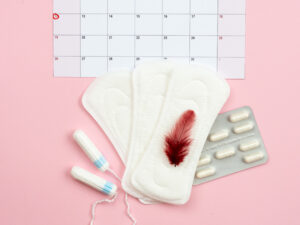
Common Postpartum Menstrual Changes Over Time
As your body recovers, your cycle may continue shifting. Perhaps with spotting between periods, changes in timing, or cycles that don’t follow a predictable schedule – irregular periods may not settle all at once.
It’s common, for example, for irregular periods to switch between shorter cycles and longer gaps. Your body’s still recalibrating hormone signals, ovulation timing, and uterine response.
During this phase, your menstrual cycle may still need time to settle, even if you’ve already had a period return.
Sleep deprivation and stress play a role.
Caring for your newborn is tiring. Poor sleep, physical exhaustion, and mental load can all affect hormone regulation.
If you’re experiencing irregular periods, this may be contributing to irregular cycles.
Lifestyle factors matter.
Intense exercise, rapid weight changes, or limited recovery time can influence how your body prioritizes energy and hormone balance.
When several factors overlap – as they often do postpartum – irregular periods may persist even during normal healing.
As we mentioned earlier, this stage doesn’t mean your cycle is broken. Over time, you’ll likely find your menstrual cycle gradually becoming predictable as sleep improves, stress eases, and your body settles into its post-pregnancy baseline.
Absent or Delayed Periods After Childbirth
Absent periods in the postpartum months are common and, in many cases, expected. This can feel unsettling, especially if you’re used to having a predictable cycle.
One of the most common reasons for irregular periods after birth or absent periods is breastfeeding, as discussed above. Many women experience irregular or no periods at all during this stage.
However, in some cases, delayed cycles may be influenced by underlying conditions. Polycystic ovary syndrome (PCOS) can contribute to longer gaps between periods, both before and after pregnancy.
If you had cycle irregularities before pregnancy, it may take longer for your body to settle into a new rhythm postpartum.
It’s also worth remembering that timing varies between all women. Postpartum recovery doesn’t follow a single timeline, and irregular periods can look very different from one person to the next. What matters most is the overall pattern and how you’re feeling.
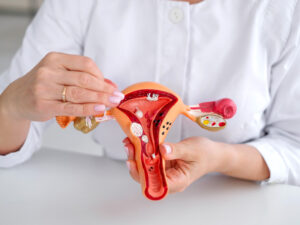
Fertility, Ovulation, and Birth Control Considerations
One important thing to know is that ovulation can return before you notice any bleeding.
Which means it’s possible to get pregnant with irregular periods even before your period returns. This can catch you off guard if your birth control isn’t already in place.
It’s also possible to get pregnant with irregular cycles – i.e. way before your renewed menstrual cycle feels predictable. That’s because ovulation can happen quietly at first.
The answer is to have conversations about birth control with your healthcare provider even when periods are delayed or absent – especially if you’re not planning another pregnancy right away.
So – it’s a myth that irregular or missing periods offer reliable protection from pregnancy. Fertility can return suddenly!
Choosing birth control during this time depends on your goals, your comfort level, and whether you’re breastfeeding.
Not all options are the same postpartum. Some methods may be better suited to this time than others. Talk to a good gynecologist in Dallas for best advice.
Painful Periods and Heavy Bleeding After Birth
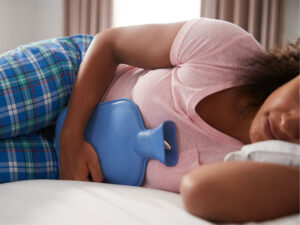
When periods return after childbirth, they don’t always feel the way they used to. Some women notice more cramping or discomfort, especially in the early months. These painful periods can happen because the uterus is still adjusting and contracting, as explained.
Heavier flow is also common at first. Your body may shed more uterine lining during early cycles, which can lead to heavy bleeding or a stronger-than-expected menstrual flow.
Small blood clots can be normal in the first few cycles, but they should gradually lessen over time.
That said, not all bleeding should be ignored.
If you’re soaking through pads quickly, passing very large clots, or bleeding lasts much longer than expected, consult your healthcare provider.
Postpartum recovery varies for everyone. But while irregular periods are common after birth, bleeding that feels excessive or worsening may be a sign to seek medical advice now.
Managing Irregular Periods and Knowing When to Get Help
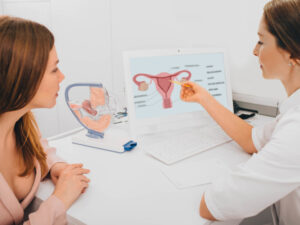
There’s no single fix for irregular periods after childbirth, but a few practical steps can support recovery. Our advice is to prioritize sleep where possible, fuel your body consistently, and ease back into exercise gradually.
These lifestyle factors don’t force a cycle to return, but they do support your body as it stabilizes.
Medical options – including hormonal birth control – are sometimes part of the picture.
Some women use birth control to help regulate bleeding or manage symptoms. In certain cases, hormonal birth control may be what creates more predictable cycles or reduces discomfort.
The right option depends on your goals, your health history, and whether you’re breastfeeding.
It’s also important to know when to check in with your healthcare provider.
If bleeding is very heavy, pain is worsening, or cycles remain highly unpredictable for a long time, it’s reasonable to seek medical advice.
A trusted healthcare provider can help determine whether what you’re experiencing fits normal postpartum recovery or needs a closer look.
Managing Your Irregular Cycles After Birth with a Stella Mattina OBGYN in Dallas
An irregular period after giving birth is one of the most common experiences of the postpartum journey. Your postpartum menstrual cycle may look different for months, but that doesn’t mean something is wrong.
At Stella Mattina, our team of healthcare providers includes some of the most trusted doctors in women’s healthcare. If it’s time to seek medical advice and you’re looking for a good OBGYN in Dallas or an OBGYN in Dallas near me, many patients searching for a gynecologist Dallas choose Stella Mattina for their care.
If you’re experiencing irregular periods after birth, take the next step by finding your nearest location and scheduling an appointment today.

Dr. Gonzalo Venegas
Gonzalo Venegas, MD is the Medical Director of Stella Mattina Health and a respected obstetrician-gynecologist with over four decades of service in the Dallas medical community. He has led the Department of Obstetrics and Gynecology at Methodist Dallas Medical Center and contributed to community health through his role on the Parkland Health & Hospital System Board. A dedicated mentor at UT Southwestern, Dr. Venegas is known for his leadership, compassion, and commitment to advancing women’s health and medical education.