
Your gut does far more than digest your food. It helps your body absorb nutrients, supports your immune system, influences your metabolism, and communicates with your brain every day.
But when your digestive health gets out of balance, the effects can show up in unexpected ways – from bloating and fatigue to changes in weight, mood, or overall wellbeing.
If you’re thinking about improving your gut health in Dallas, it’s worth knowing that lasting results rarely come from a single supplement or a social media trend.
A healthy gut depends on many factors, including diet, sleep, exercise, stress, existing medical conditions, and the trillions of bacteria that make up your gut microbiome.
At Stella Mattina Primary Care in Dallas, we help you understand what may be affecting your digestive health and overall wellness.
This guide explains why gut health matters, which signs indicate something may be wrong, and how primary care can help you build healthier habits for the long term.
Table of contents
What is Gut Health
Signs Your Gut May Be Unhealthy
The Connection Between Gut Health and Weight Loss
Gut Health and Your Immune System
Gut Health and Mental Wellness
How Primary Care Providers Evaluate Gut Health
How Can I Improve My Gut Health?
 What Is Gut Health?
 What Is Gut Health?
Gut health describes how well your digestive system functions and how effectively the trillions of microorganisms living in your intestines work together.
Known as the gut microbiome, this community of bacteria, fungi, and other microbes plays an important role in keeping your body healthy.
Understanding the Gut Microbiome
Most gut bacteria are either helpful or harmless. Together, they help break down food, produce certain vitamins, support your immune system, and maintain the protective lining of your intestines. A healthy gut microbiome is diverse, with many different types of beneficial bacteria working in balance.
Why Gut Bacteria Matter
The reason is that harmless bacteria can become harmful if they overgrow, or move to the wrong place. It’s all about balance!
When that balance is disrupted, digestive symptoms may begin to appear.
Poor diet, illness, stress, lack of sleep, some medications, and other lifestyle factors can all affect the balance of your gut bacteria.
Over time, these changes cause problems.
The Connection Between Digestion and Overall Health
Researchers continue to discover links between digestive health and many other aspects of wellbeing, including metabolism, immune function, and mental health.
While gut health is only part of the picture, maintaining a healthy digestive system definitely supports your overall wellness and help your body function at its best.
 Signs Your Gut May Be Unhealthy
 Signs Your Gut May Be Unhealthy
You may only notice occasional discomfort at first. Then symptoms become more frequent or begin affecting your daily routine.
That’s when you should mention them at your annual wellness exam if one is due. Don’t automatically assume you have an unhealthy gut. Many of these symptoms have other possible causes.
But if they persist, it’s worth discussing them with your primary care provider rather than trying to diagnose yourself via the internet.
What might you notice?
Bloating
Everyone experiences bloating from time to time. Persistent bloating is different.
It may be linked to constipation, food intolerances, changes in gut bacteria, or other digestive conditions. A medical assessment can help identify what’s behind it.
Constipation
Constipation can affect your energy levels, appetite, and quality of life. It often helps to drink enough water, eat more fiber, and stay active. If constipation continues, your provider can look for underlying causes.
Diarrhea
Occasional diarrhea is common during a stomach illness. Frequent or recurring episodes deserve more attention.
Infections, medications, food sensitivities, inflammatory conditions, and other medical problems may also be involved.
Food Sensitivities
If certain foods repeatedly leave you feeling bloated, uncomfortable, or unwell, don’t simply cut out large food groups without advice. Your provider can help determine whether a food sensitivity, allergy, or another digestive issue may be responsible.
Fatigue
Feeling tired all the time isn’t always due to lack of sleep. Digestive problems may reduce how well your body absorbs nutrients. And chronic inflammation and other health conditions can also contribute to ongoing fatigue.
Skin Issues
Your skin and digestive system are more closely connected than you may realize.
Although skin problems have many possible causes, some inflammatory skin conditions have been linked with changes in gut health. Looking at your health as a whole often provides the clearest picture of what’s happening.
 The Connection Between Gut Health and Weight Loss
 The Connection Between Gut Health and Weight Loss
Many people think of gut health and weight loss as separate topics. They’re closely connected. Your digestive system influences how your body breaks down food, absorbs nutrients, and regulates many of the processes involved in maintaining a healthy weight.
It isn’t the whole story, but it’s one part you shouldn’t overlook.
Gut Bacteria and Metabolism
Your gut microbiome helps process the food you eat. Different types of gut bacteria may affect how efficiently your body extracts energy from food and how it regulates appetite.
Researchers are still learning exactly how these relationships work, but it’s clear that a healthy gut supports a healthy metabolism, which supports maintaining a healthy weight.
Inflammation
Long-term, low-grade inflammation you probably aren’t aware of has been linked with obesity – and also type 2 diabetes and other chronic health conditions.
Because inflammation can affect the way your body regulates metabolism, it may also make losing weight more difficult for you.
Sometimes, hormone therapy can help if estrogen and progesterone levels have fallen during menopause and caused unwanted weight gain.
Nutrient Absorption
Even a balanced diet can’t do its job if your body struggles to absorb nutrients efficiently.
A healthy digestive system helps your body make the best use of vitamins, minerals, protein, and other nutrients needed for energy, muscle function, and everyday health.
Healthy Eating Habits
Improving gut health doesn’t require a restrictive diet or expensive supplements. For most people, eating a variety of fiber-rich foods, drinking enough water, limiting highly processed foods, and staying physically active are practical first steps.
Your primary care provider can also help identify medical conditions that may be affecting your progress if weight loss has become difficult despite your best efforts.
 Gut Health and Your Immune System
 Gut Health and Your Immune System
Much of your immune system is closely connected to your digestive tract. That’s one reason a healthy gut matters well beyond digestion.
Every day, your gut helps your body distinguish between harmless substances and potential threats while supporting a balanced immune response.
Immune Function
The gut microbiome plays an important role in training and supporting your immune system. Beneficial gut bacteria help maintain the protective lining of your intestines and work alongside your immune cells to defend against harmful organisms.
When this balance gets disrupted, your body’s natural defenses may not function as effectively.
Chronic Inflammation
Your immune system is designed to respond to infection and injury. But when inflammation continues for long periods, it places extra strain on your body.
Researchers are still studying the relationship between gut health and chronic inflammation. But maintaining a healthy gut microbiome is one part of supporting long-term health.
Preventing Illness
No single food, or supplement, or probiotic can prevent every illness. Good digestive health is simply one piece of a much bigger picture.
Eating a balanced diet, exercising regularly, managing stress, getting enough sleep, and keeping up with preventive healthcare all help support your immune system.
Regular visits with your primary care provider also make it easier to identify health concerns before they become more serious.
 Gut Health and Mental Wellness
 Gut Health and Mental Wellness
Your digestive system and your brain are in constant communication. Researchers call this the gut-brain axis.
It’s a two-way network that helps explain why emotional stress can affect digestion, and why digestive problems may influence how you feel. Let’s unpack this a bit more.
Anxiety
Many people notice that stress or anxiety affects their stomach. You might lose your appetite before an important event or experience digestive discomfort during periods of worry.
While anxiety has many causes, the gut-brain connection helps explain why emotional and digestive symptoms often occur together.
Stress
Ongoing stress can affect the balance of your gut microbiome and may also change the way your digestive system functions.
That’s one reason stress management is an important part of overall health. It helps protect your gut.
Small, consistent habits such as regular exercise, quality sleep, and time to relax can benefit both your digestive health and your mental wellbeing.
Mood
Researchers continue to explore how the gut microbiome may influence mood through the complex communication between your digestive system, nervous system, and immune system.
Although improving your gut health is not a treatment for depression or other mental health conditions, looking after your digestive health is one part of supporting your overall wellbeing. Asking for mental health support is also an option.
 How Primary Care Providers Evaluate Gut Health
 How Primary Care Providers Evaluate Gut Health
So how can you discover how well your gut is?
Digestive symptoms don’t always point to a single cause. Bloating, constipation, fatigue, or changes in bowel habits may be linked to your diet, stress, medications, an underlying health condition, or a combination of factors. That’s why a thorough assessment matters.
Medical History
Your provider will begin by asking about your symptoms, when they started, and whether anything makes them better or worse. Your medical history, family history, and current medications can all provide valuable clues.
Diet Review
Food is only one part of gut health, but it’s an important one. Your provider may ask what you typically eat, how much water you drink, whether you’ve recently changed your diet, or if certain foods seem to trigger symptoms.
Lab Work
Simple blood tests or other investigations may help identify conditions that affect digestive health, such as nutritional deficiencies, infection, or inflammation. If testing is appropriate, your provider will explain what they recommend and why.
Lifestyle Recommendations
Small changes often make a meaningful difference. Depending on your symptoms, your provider may recommend adjustments to your diet, exercise routine, sleep habits, or stress management. The goal is to find realistic approaches that fit your everyday life.
Referral When Necessary
Most digestive concerns can be assessed in primary care. If your symptoms suggest a condition that needs specialist investigation or treatment, your provider can arrange a referral to a gastroenterologist and coordinate your ongoing care.
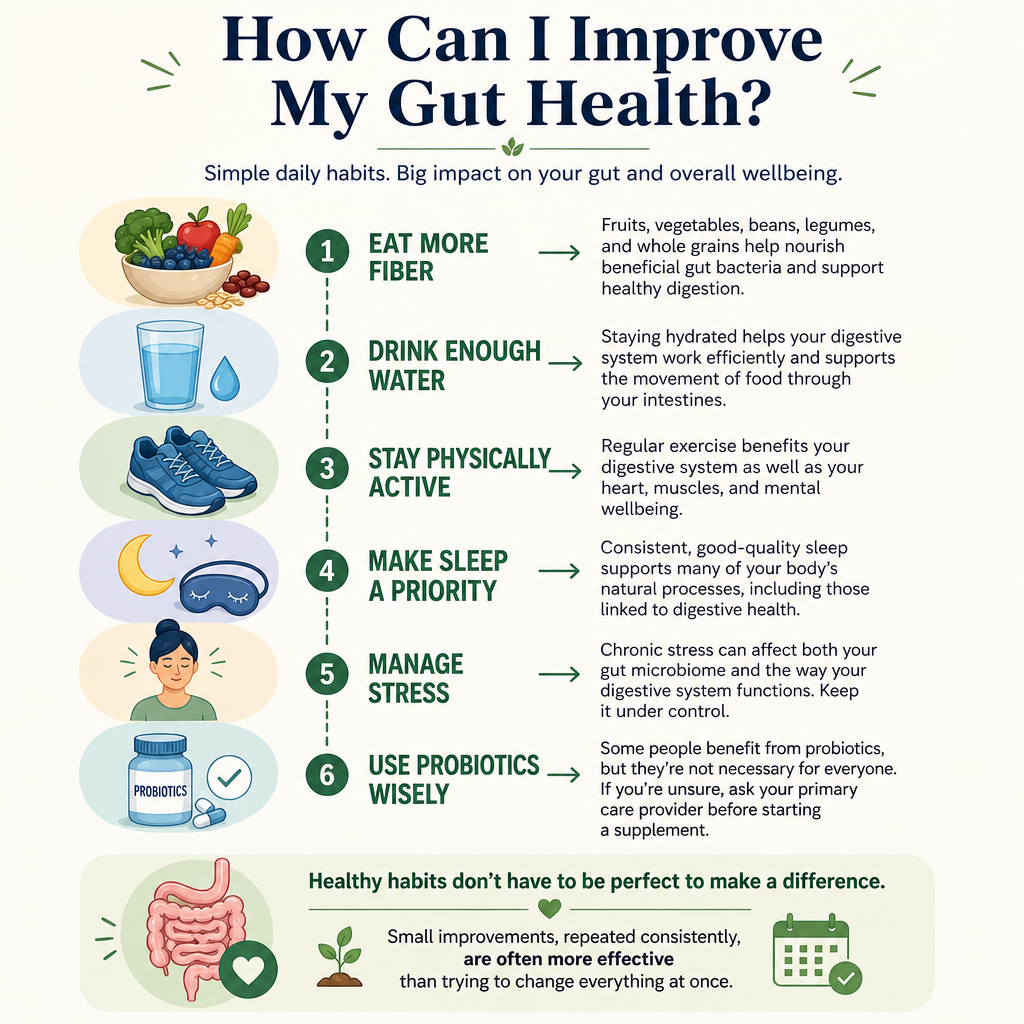
How Can I Improve My Gut Health?
Improving your gut health doesn’t mean following the latest trend or buying expensive supplements. Everyday habits have the greatest impact, especially when they become part of your routine. These simple steps can help support a healthy gut and your overall wellbeing.
- Eat more fiber – Fruits, vegetables, beans, legumes, and whole grains help nourish beneficial gut bacteria and support healthy digestion.
- Drink enough water – Staying hydrated helps your digestive system work efficiently and supports the movement of food through your intestines.
- Stay physically active – Regular exercise benefits your digestive system as well as your heart, muscles, and mental wellbeing.
- Make sleep a priority – Consistent, good-quality sleep supports many of your body’s natural processes, including those linked to digestive health.
- Manage stress – Chronic stress can affect both your gut microbiome and the way your digestive system functions. Keep it under control.
- Use probiotics wisely – Some people benefit from probiotics, but they’re not necessary for everyone. If you’re unsure, ask your primary care provider before starting a supplement.
Healthy habits don’t have to be perfect to make a difference.
Small improvements, repeated consistently, are often more effective than trying to change everything at once.
If digestive symptoms continue despite these changes, it’s time to schedule an appointment with your Dallas primary care provider to look for an underlying cause.
 Stella Mattina: Your Partner for Better Gut Health in Dallas
 Stella Mattina: Your Partner for Better Gut Health in Dallas
If digestive symptoms have become part of everyday life, it’s time to understand exactly what’s going on in your body.
At Stella Mattina Primary Care, we take the time to look at the bigger picture. Your medical history, lifestyle, nutrition, and overall health all play a role in developing a plan that’s right for you. When specialist care is needed, we’ll guide you through that process too.
Better gut health isn’t a quick fix. It comes from building habits that support your long-term health with the right medical advice when you need it.
If you’re looking to improve your gut health in Dallas, schedule a wellness visit at one of our primary care clinics – Carrollton, Merit, and Buckner.
Walk-ins and same-day appointments are always welcome. We accept most insurance. Schedule your visit online or call 214-942-3100 today.

Asma Bhaidani, PA-C
AsmaBhaidani, PA-C graduated in 2008 from Midwestern University in Arizona with a Masters in Medical Science. She received her undergraduate in Psychology with a focus on Pre-Med. With nearly two decades of experience, Asma uses her background in non-narcotic pain management, weight loss counseling, and Family Medicine to empower the next generation with the knowledge and confidence to achieve their wellness aims.